
Sacked Because of Your Mental Health? Know Your Rights
Summary
- Being sacked for mental health issues is often unlawful discrimination.
- Employers frequently disguise mental health dismissals as capability or conduct matters.
- You have strong legal protections under disability discrimination and unfair dismissal laws.
- Prompt action is essential as you only have six months less one day to bring a claim, or three months less one day if the incident happened before 1st October 2026.
Why Dismissing You for Mental Ill Health Is Often Unlawful
Mental health conditions that substantially affect your daily life qualify as disabilities under the Equality Act 2010.
This means firing you because of depression, anxiety, PTSD or other mental health issues amounts to disability discrimination.
Employers have a legal duty to make reasonable adjustments to help you stay in work.
They cannot simply dismiss you when your mental health affects your performance without first exploring alternatives like flexible hours, reduced workload or workplace modifications.
Even if your mental health condition doesn't qualify as a disability, dismissing you without following proper procedures makes it unfair dismissal.
Your employer must show they acted reasonably and followed a fair process before terminating your employment.
Capability, Conduct or Discrimination: How Employers Disguise It
Smart employers rarely admit they sacked you for mental health reasons. Instead, they frame dismissals as performance issues, claiming your work quality dropped or you missed deadlines.
Some employers take the conduct route, alleging you were difficult, aggressive or unprofessional. They conveniently ignore that irritability and mood changes are symptoms of mental health conditions like depression and anxiety.
Watch for patterns where your treatment changed after disclosing mental health issues or taking sick leave.
Comments about you being 'unreliable' or 'not coping' often reveal the real reason behind capability dismissals.
What Our Clients Say
Building Your Case for Unfair and Discriminatory Dismissal
Document everything from the moment you disclose mental health issues or take related sick leave. Save emails, meeting notes and any comments colleagues or managers made about your mental health.
Gather evidence of your previous good performance through appraisals, emails praising your work, and testimonials from colleagues. This proves any decline coincided with your mental health struggles, not inherent capability issues.
Medical evidence strengthens your case significantly. GP notes, occupational health reports and specialist assessments can prove your condition qualifies as a disability and show how workplace stress worsened your mental health.
Let Grapple AI Challenge an Unfair Mental Health Dismissal
Traditional law firms often lack the specialist knowledge to properly challenge mental health dismissals. Our AI system instantly identifies discrimination patterns and builds comprehensive cases that expose employer bias.
We analyse your entire employment history to spot the exact moment your treatment changed after mental health disclosure. Our technology finds evidence that human lawyers miss, building stronger cases for maximum compensation.
Time limits for employment tribunal claims are strict, so immediate action protects your rights. Our AI assessment takes minutes, not weeks, giving you the fastest route to justice for mental health discrimination.
Frequently Asked Questions
Can I Be Fired For Taking Time Off For My Mental Health?
No, taking sick leave for mental health issues is legally protected. Dismissing you for mental health related absences likely constitutes disability discrimination and unfair dismissal.
Is Dismissing Someone For Mental Illness Automatically Discrimination?
If your mental health condition substantially affects daily life, dismissal without reasonable adjustments is disability discrimination. Even without disability status, inadequate procedures make dismissal unfair.
What Compensation Can I Claim If I'm Sacked For Mental Health Reasons?
You can claim lost wages, future earnings, pension losses and injury to feelings awards. Mental health discrimination cases often attract higher compensation due to the personal impact involved.
How Long Do I Have To Challenge A Mental Health Dismissal?
You have six months less one day from your dismissal date to submit an employment tribunal claim, or only three months less one day if you were dismissed before 1st October 2026. Missing this deadline usually means losing your right to compensation entirely. Further detail about the new employment tribunal claim deadlines is given in our latest News and Reports page.
A Success Story
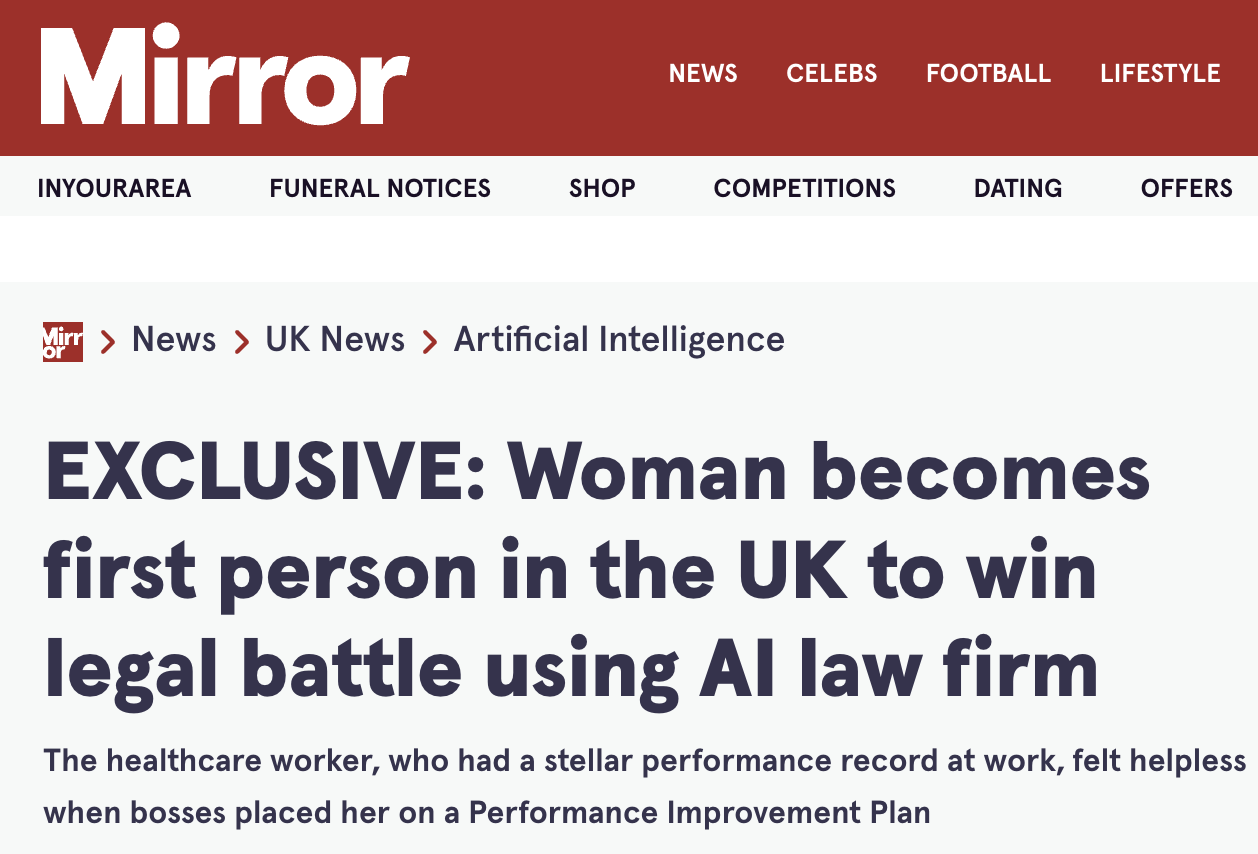
After years of strong performance, 'Jane' was placed on a Performance Improvement Plan (PIP), while on sick leave for a health condition.
With no prior warning, she felt cornered and unsure where to turn.
The process was being used as a fast-track exit strategy, to get rid of her without a fair settlement agreement offer.
Struggling with health, caring for an elderly relative, and fearing the financial fallout of losing her job, Jane turned to Grapple Law for help.
She took swift, decisive action, sending detailed legal letters to her employer and preparing for her formal meetings.
Within weeks, Jane secured a settlement of around £30,000, and paid a modest success fee to Grapple Law.