

What Constitutes Sexual Harassment?
Know The Line. Protect Yourself Today.
Summary
- What constitutes sexual harassment is unwelcome sexual conduct that affects your work or creates a hostile environment.
- It can be words, texts, images, touching, pressure, or threats tied to your job.
- A joke can qualify when it is sexual, targeted, repeated, or humiliating.
- You can take action by documenting it, saving evidence, and reporting it in writing.
The Facts: What Constitutes Sexual Harassment
What constitutes sexual harassment is unwanted conduct of a sexual nature that violates your dignity, or makes your workplace intimidating, hostile, degrading, humiliating or offensive.
It is about impact, not intent, and you do not have to laugh, flirt back, or complain perfectly for it to count.
Under UK law, sexual harassment covers unwanted conduct of a sexual nature, and also being treated less favourably because you rejected, or gave in to, that conduct.
For example, someone might hint that your shifts, pay, promotion or safety depend on you going along with their sexual advances.
Harassment related to your sex, sexual orientation or gender reassignment can also be unlawful under the Equality Act 2010, alongside conduct that is sexual in nature.
Retaliation matters too, because punishing you for reporting can be illegal even if the company argues the original behaviour was minor.
Examples Of What Constitutes Sexual Harassment
Examples of what constitutes sexual harassment include repeated sexual comments, rating your body, sexual gestures, unwanted touching, blocking your path, or asking for sexual favours.
It also includes showing porn at work, sending explicit images, or pressuring you to be alone with someone after you said no.
What constitutes sexual harassment also covers digital conduct like late night messages, sexual memes, or repeated requests for dates after you decline.
Other examples include being offered a pay rise, better shifts or a way out of a disciplinary in exchange for sex, or being told your job depends on it.
What people say about Grapple
Does A Joke Constitute Sexual Harassment?
A joke can be what constitutes sexual harassment when it is sexual, targets you, or keeps coming after you object. If the joke makes your workplace degrading or unsafe, it can qualify even when the speaker calls it humor.
One severe incident can also cross the line, especially when it involves threats, coercion, exposure, or unwanted physical contact. Your reaction does not have to be perfect, because freezing, nervous laughter, or staying quiet is common when someone has power over you.
Take Action On What Constitutes Sexual Harassment
Start by writing down what happened, when, where, who saw it, and how it affected your work, then save screenshots, emails, and chat logs. If you feel safe, clearly tell the person to stop once, then report it in writing to a manager, human resources, or the channel in your policy.
What constitutes sexual harassment can happen outside working hours if it connects to work, like a supervisor texting you at night or a co-worker harassing you at a work event. From 30th October 2026, harassment by a client or customer can also be your employer's responsibility. Further detail about the new sexual harassment rules is given in our latest News and Reports page.
If you want backup, Grapple Law can help. It's a legal AI that can help you organise evidence into a clean timeline and draft a firm written report for you at grapple.law/contact.
Our philosophy
- Too many people get a raw deal from companies and corporations because of unfair economics
- Standing up against corporations
- We only represent individuals, never businesses
- If you've been treated badly by the system, Grapple Law can help
Frequently Asked Questions
What legally counts as sexual harassment? Unwanted behaviour of a sexual nature that violates your dignity or creates an offensive or hostile environment can qualify.
Does the behaviour have to be intentional? No. It’s the impact on you that matters, not the intention behind the behaviour.
Can non-physical behaviour be sexual harassment? Yes. Comments, messages, jokes, and other non-physical actions can all be unlawful.
Who can bring a sexual harassment claim? Employees, workers, and in some cases job applicants can all be protected under the law.
A Success Story
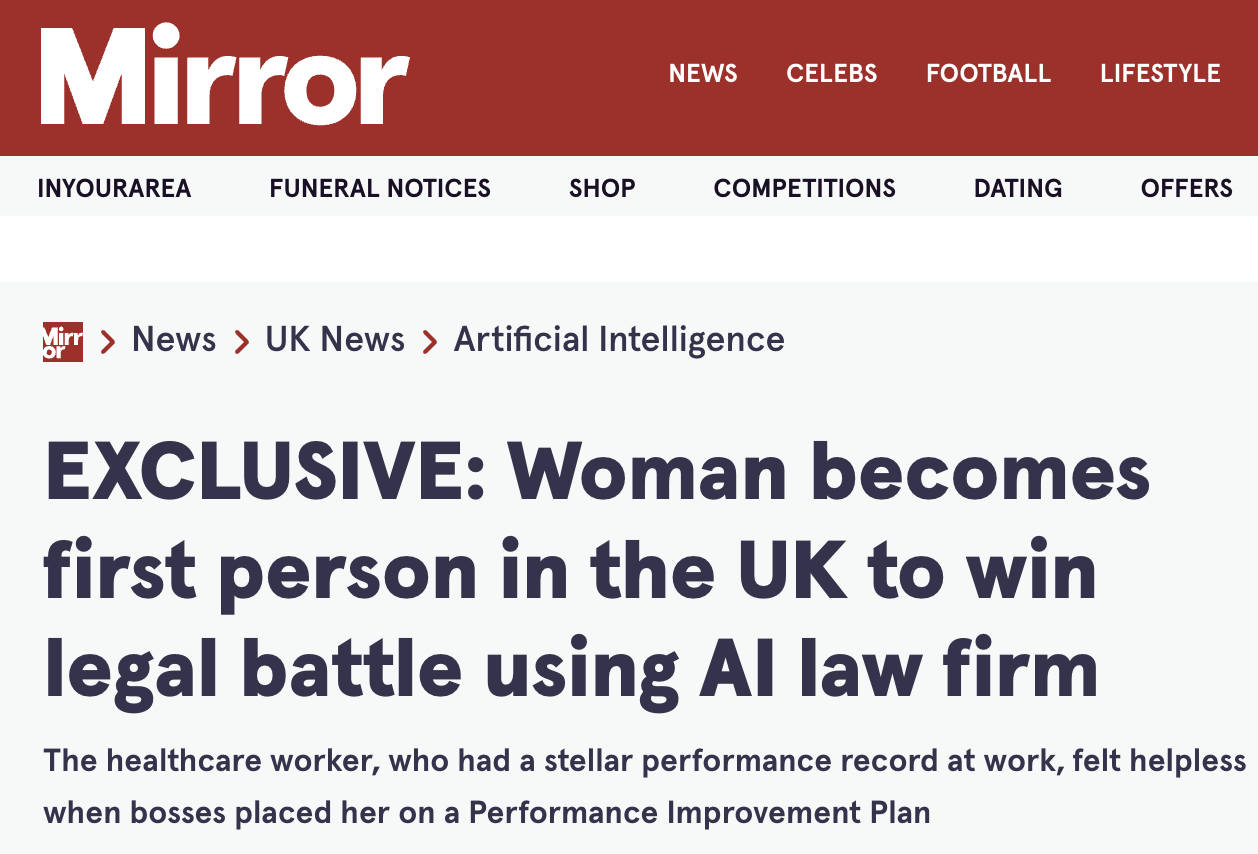
After years of strong performance, 'Jane' was placed on a Performance Improvement Plan (PIP), while on sick leave for a health condition.
With no prior warning, she felt cornered and unsure where to turn.
The process was being used as a fast-track exit strategy, to get rid of her without a fair settlement agreement offer.
Struggling with health, caring for an elderly relative, and fearing the financial fallout of losing her job, Jane turned to Grapple Law for help.
She took swift, decisive action, sending detailed legal letters to her employer and preparing for her formal meetings.
Within weeks, Jane secured a settlement of around £30,000, and paid a modest success fee to Grapple Law.