
Made Redundant on Maternity Leave? Your Rights
Summary
- New mothers have enhanced protection against redundancy during maternity leave.
- Employers must offer suitable alternative roles before making you redundant.
- Many maternity redundancies are sham exercises designed to remove pregnant women.
- Grapple Law's AI system spots the patterns that reveal discriminatory treatment.
The Special Protection New Mums Have
Redundancy during maternity leave triggers special legal protection that most employers conveniently forget to mention. You cannot be selected for redundancy because of your pregnancy or maternity leave.
The law creates a protective bubble around new mothers that lasts from pregnancy through to the end of maternity leave. This means employers must jump through extra hoops before they can make you redundant.
If a genuine redundancy situation arises, you get first pick of any suitable alternative employment. Your employer cannot simply dismiss you and move on to interviewing other candidates.
Suitable Alternative Roles Come First
Before making you redundant, your employer must offer you any suitable alternative roles that exist within the business. This is not a competitive process where you interview against other candidates.
The role must be suitable and appropriate for you, considering your skills, experience and the terms of your original contract. If such a role exists, you have the automatic right to it.
Employers often claim no suitable alternatives exist when basic investigation reveals multiple vacant positions. This is where their true intentions become crystal clear.
What Our Clients Say
Sham Redundancies And How To Spot Them
Many redundancy during maternity leave cases are elaborate shams designed to remove women who became inconvenient when they got pregnant. The timing alone should raise immediate red flags.
Watch for these warning signs: sudden restructuring announcements after you announced your pregnancy, vague explanations about business needs, or roles that mysteriously reappear after your dismissal. These patterns reveal discriminatory intent.
Genuine redundancies involve proper consultation, clear business rationale, and fair selection processes. Sham redundancies skip these steps or apply them superficially to create a legal veneer.
How Grapple AI Challenges Maternity Redundancies
Our AI system analyses thousands of employment tribunal decisions to identify the patterns that distinguish genuine redundancies from pregnancy discrimination. It spots the telltale signs human lawyers might miss.
The AI examines timing, process flaws, and inconsistencies in employer explanations to build your discrimination case. It cross references your situation against successful tribunal claims to predict your chances of success.
This technology means we can challenge redundancy during maternity leave cases faster and more effectively than traditional legal approaches. The AI never gets tired of fighting unfair treatment.
Frequently Asked Questions
Can I Be Made Redundant While On Maternity Leave?
Yes, but only if there is a genuine redundancy situation and your employer offers you any suitable alternative roles first. The redundancy cannot be connected to your pregnancy or maternity leave.
What Is The Right To A Suitable Alternative Role?
If your employer has any suitable alternative positions available, they must offer them to you automatically without competition. This right applies before they can make you redundant during maternity leave.
How Do I Prove Pregnancy Discrimination?
Look for timing patterns, process failures, and inconsistent explanations from your employer. Grapple Law's AI analyses these factors against thousands of successful tribunal cases to build your evidence.
What Compensation Could I Be Owed?
Successful pregnancy discrimination claims typically result in compensation for lost earnings, future loss, and injury to feelings. Awards often exceed £20,000 depending on your circumstances and salary level.
A Success Story
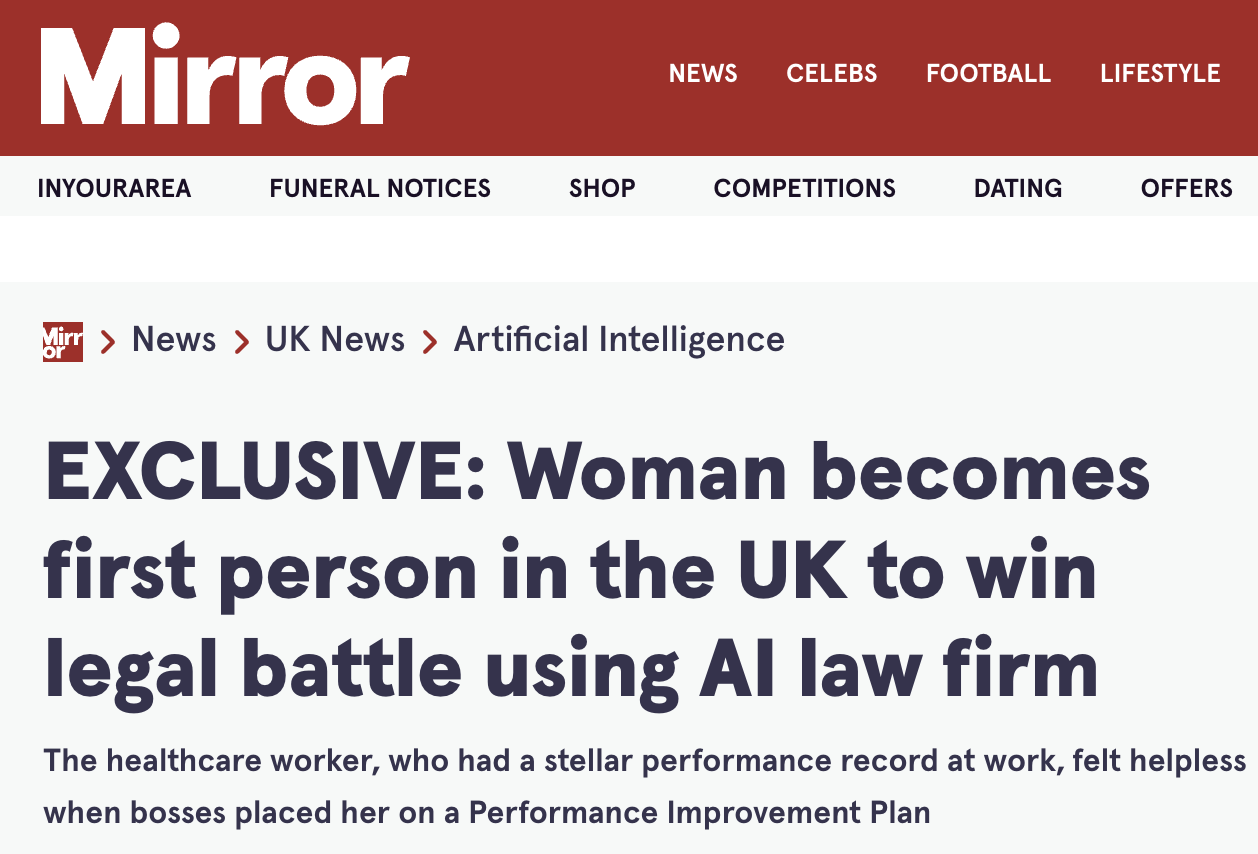
After years of strong performance, 'Jane' was placed on a Performance Improvement Plan (PIP), while on sick leave for a health condition.
With no prior warning, she felt cornered and unsure where to turn.
The process was being used as a fast-track exit strategy, to get rid of her without a fair settlement agreement offer.
Struggling with health, caring for an elderly relative, and fearing the financial fallout of losing her job, Jane turned to Grapple Law for help.
She took swift, decisive action, sending detailed legal letters to her employer and preparing for her formal meetings.
Within weeks, Jane secured a settlement of around £30,000, and paid a modest success fee to Grapple Law.