
Forced Back To The Office? Know Your Rights
Summary
- Blanket return to office orders often breach employment contracts and legal duties.
- Years of remote work creates new contractual rights through custom and practice.
- Disabled employees and carers have stronger legal protection against forced office returns.
- Grapple AI builds bulletproof legal cases to challenge unlawful RTO mandates.
Why Blanket Return to the Office Orders Often Break The Law
Most employers think they can force everyone back to the office with a simple company announcement. They're wrong.
Employment contracts rarely give employers unlimited power to change your working location. If your contract says nothing about office attendance, or mentions flexible working, you have legal protection.
Many Return to the Office (RTO) mandates breach implied terms of trust and mutual respect. Courts increasingly recognise that unilateral workplace changes damage the employment relationship.
Employers must also consider their duty of care for employee well being. Forced office returns that ignore individual circumstances often fail this basic legal test.
Contracts, Custom And Practice Explained
Your actual working arrangements matter more than what your original contract said. Legal doctrine called "custom and practice" creates new contractual rights when you've worked remotely for extended periods.
If you've worked from home for over a year with employer approval, this becomes part of your contract. Courts treat established working patterns as binding contractual terms.
Email trails showing management praise for remote work strengthen your position. Performance reviews mentioning successful home working create powerful evidence.
Employers can't simply ignore years of accepted practice. They need genuine business reasons and proper consultation to change established remote working arrangements.
What Our Clients Say
Disability, Caring And Discrimination Risks
Disabled employees have the strongest protection against being forced to return to office. Remote working often counts as a reasonable adjustment under equality law.
Employers must prove that office attendance is essential for your specific role. Generic productivity arguments rarely meet this legal standard for disabled workers.
Parents and carers also have significant rights under flexible working legislation. Many Return to the Office (RTO) mandates breach implied terms of trust and mutual respect. Courts increasingly recognise that unilateral workplace changes damage the employment relationship.
Age discrimination claims are increasingly common when older workers face forced office returns. Employers struggle to justify why remote performance suddenly becomes inadequate.
How Grapple AI Pushes Back On RTO Mandates
Grapple AI analyses your specific contract terms, email history, and performance records to build unbeatable legal arguments. Our algorithms identify every weakness in employer RTO justifications.
We draft legally bulletproof responses that force employers to retreat from blanket mandates. Most back down when faced with proper legal challenge.
Our AI processes thousands of employment law precedents to find the strongest arguments for your situation. We know exactly which legal buttons to press.
Grapple doesn't just threaten legal action. We deliver comprehensive legal strategies that protect your remote working rights while maintaining your employment relationship.
Frequently Asked Questions
Can My Employer Legally Force Me Back To The Office?
Not always. Your employer needs contractual authority and genuine business justification to change your working location, especially if you've worked remotely successfully.
What If I've Worked From Home For Years?
Extended remote working creates contractual rights through custom and practice. Employers can't easily override years of accepted working arrangements without proper justification.
Can I Refuse To Return Without Losing My Job?
You have stronger legal protection than you think. Proper legal challenge often forces employers to maintain flexible arrangements rather than risk tribunal claims.
Is Return to the Office (RTO) Discrimination Against Carers Or Disabled Staff?
Often yes. Blanket office returns that ignore caring responsibilities or disability needs frequently breach equality law and flexible working rights.
A Success Story
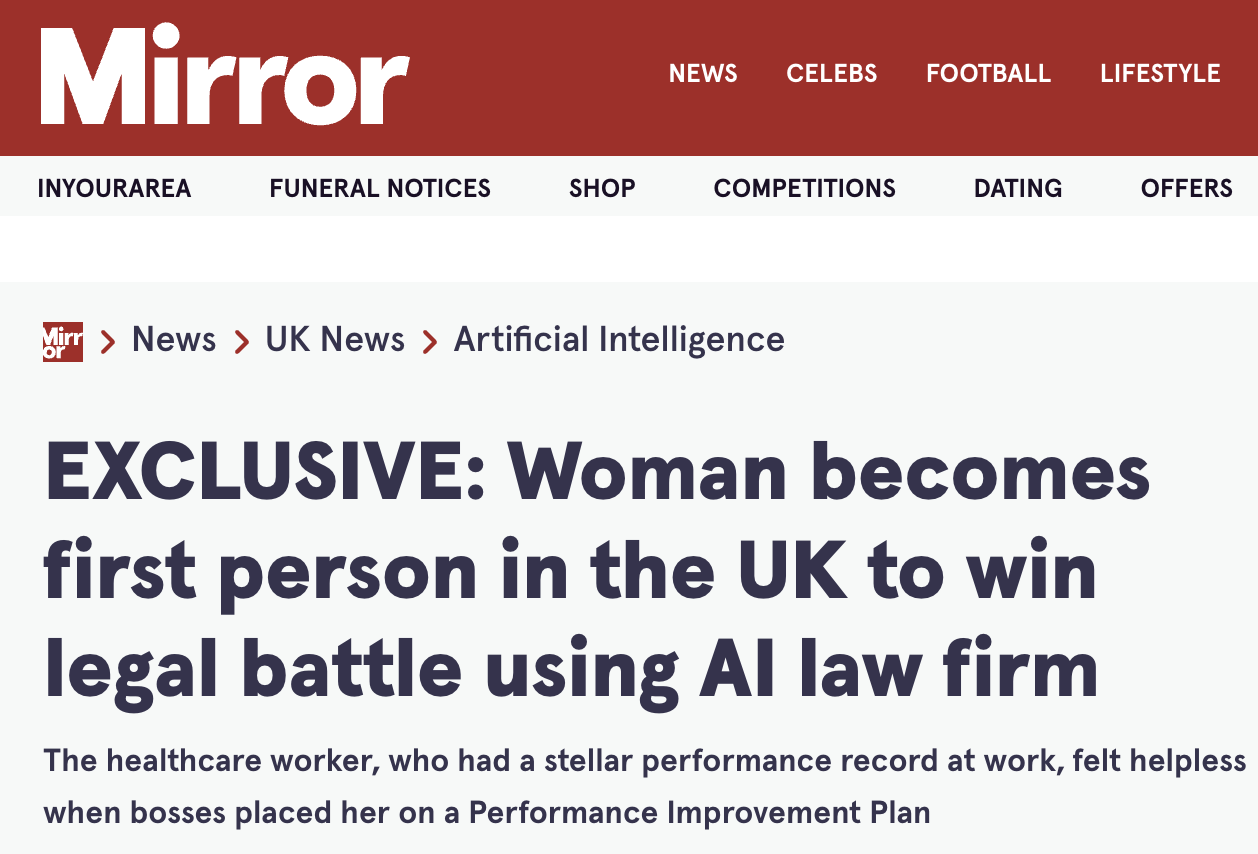
After years of strong performance, 'Jane' was placed on a Performance Improvement Plan (PIP), while on sick leave for a health condition.
With no prior warning, she felt cornered and unsure where to turn.
The process was being used as a fast-track exit strategy, to get rid of her without a fair settlement agreement offer.
Struggling with health, caring for an elderly relative, and fearing the financial fallout of losing her job, Jane turned to Grapple Law for help.
She took swift, decisive action, sending detailed legal letters to her employer and preparing for her formal meetings.
Within weeks, Jane secured a settlement of around £30,000, and paid a modest success fee to Grapple Law.