
When Your Employer Pulls the Plug on Home Working
Summary
- Employers cannot unilaterally force you back to the office without consent.
- Changing your work location may breach your employment contract terms.
- Verbal working from home agreements still create binding legal obligations.
- Forced office returns can trigger constructive dismissal claims in many cases.
Can They Actually Force You Back?
Your employer cannot simply decide your working from home arrangement is over. If home working was part of your original contract or agreed separately, they need your consent to change it.
Many employers try to bully staff back into offices by claiming business needs override individual agreements. This is legally wrong and you have rights to resist.
The location where you work is a fundamental contract term. Your employer stopped working from home policies unilaterally, but that does not give them carte blanche to ignore existing agreements.
Contract Changes Need Your Consent
Employment contracts are binding legal documents that protect both parties. When your employer tries to change where you work, they are proposing a contract variation.
You have the absolute right to refuse any contract change you disagree with. Your employer cannot force acceptance through threats or ultimatums.
Even if working from home was introduced during COVID as a temporary measure, many arrangements have become permanent through practice and mutual agreement. Courts recognize these evolved working patterns as contractual rights.
What Our Clients Say
Constructive Dismissal Warning Signs
When your employer stops working from home arrangements without consultation, this could constitute constructive dismissal. You may have grounds to resign and claim compensation.
Key warning signs include refusing to discuss flexible arrangements, setting arbitrary return dates, or threatening disciplinary action for continuing to work from home. These behaviours breach the implied duty of trust and confidence.
Constructive dismissal occurs when employers make your working life so difficult that resignation becomes inevitable. Forced office returns often cross this legal threshold.
How Grapple AI Stops Unfair WFH Reversals
Grapple Law uses artificial intelligence to analyse your employment contracts and identify breaches instantly. Our AI reviews your working from home agreements and calculates your compensation entitlement.
Traditional law firms take weeks to respond when your employer stops working from home arrangements. Grapple AI gives you legal firepower within hours, not months.
Our platform builds bulletproof cases by analysing contract terms, email trails, and workplace policies. You get the legal ammunition needed to fight back against unfair treatment immediately.
Frequently Asked Questions
Can My Employer Suddenly Stop Me Working From Home?
No, if working from home was agreed in your contract or became an established practice, your employer needs your consent to change it. They cannot unilaterally force you back to the office.
Is Changing My Work Location A Contract Breach?
Yes, your work location is a fundamental contract term. Changing it without agreement constitutes a breach that may entitle you to compensation or constructive dismissal claims.
What If WFH Was Agreed Verbally?
Verbal agreements are legally binding and enforceable. Email confirmations, practice over time, and witness testimony can all prove your working from home arrangement existed.
Can I Resign And Claim Constructive Dismissal?
Yes, if your employer fundamentally breaches your contract by forcing office returns without consent, you may resign and claim constructive dismissal compensation. Document everything first.
A Success Story
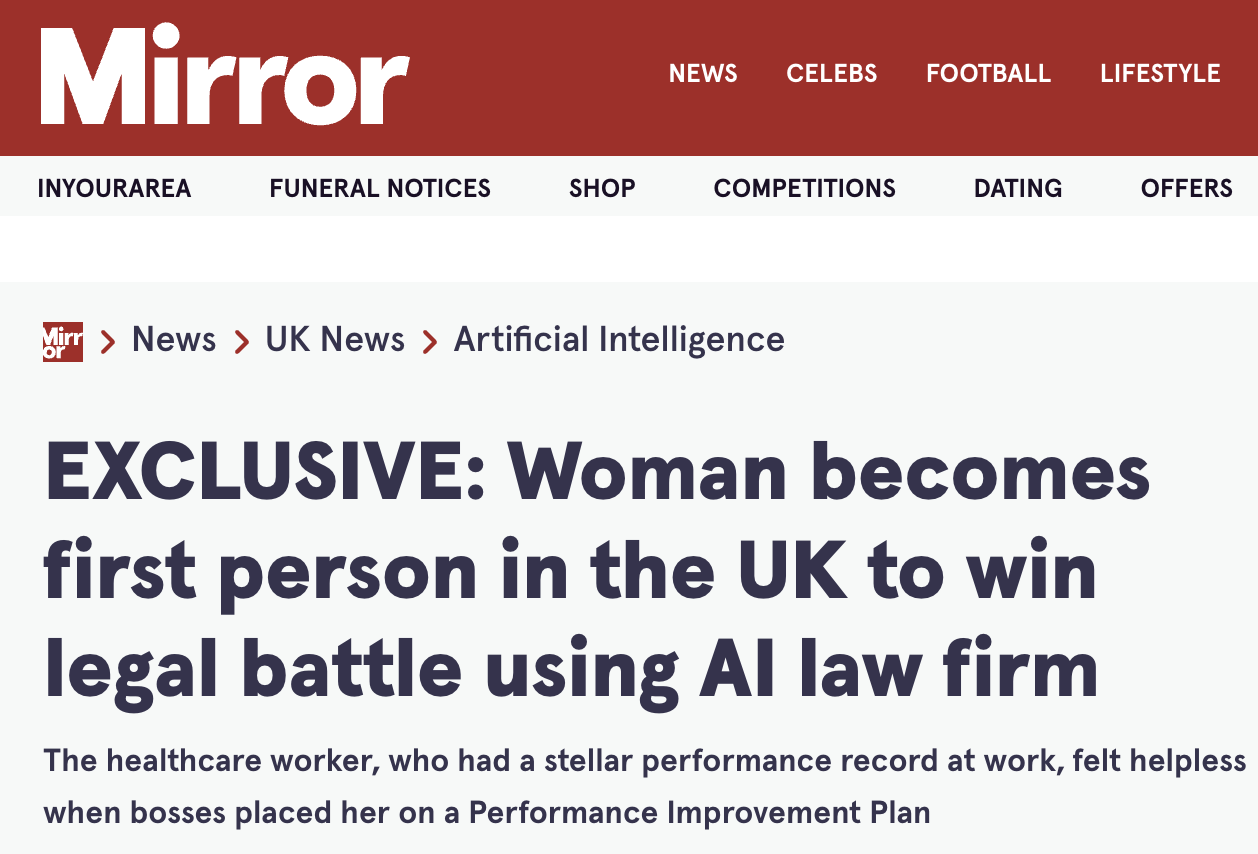
After years of strong performance, 'Jane' was placed on a Performance Improvement Plan (PIP), while on sick leave for a health condition.
With no prior warning, she felt cornered and unsure where to turn.
The process was being used as a fast-track exit strategy, to get rid of her without a fair settlement agreement offer.
Struggling with health, caring for an elderly relative, and fearing the financial fallout of losing her job, Jane turned to Grapple Law for help.
She took swift, decisive action, sending detailed legal letters to her employer and preparing for her formal meetings.
Within weeks, Jane secured a settlement of around £30,000, and paid a modest success fee to Grapple Law.